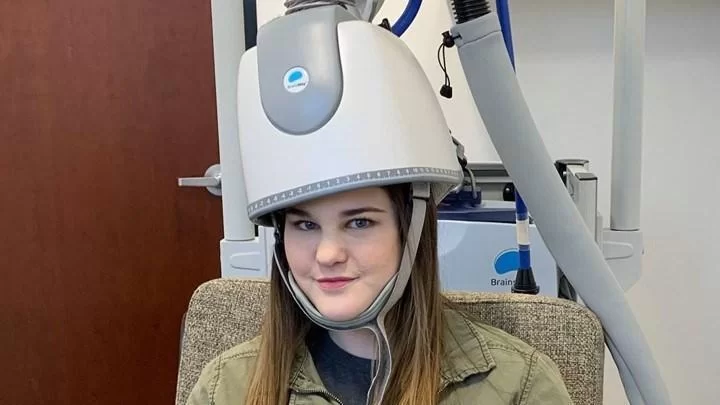
Starting any new medical treatment can feel intimidating, especially when it involves your brain. If you have decided to try transcranial magnetic stimulation (TMS) for depression, knowing what happens during a session can ease much of that uncertainty. The good news is that TMS is noninvasive, requires no anesthesia, and lets you return to your normal day immediately afterward. Here is a step-by-step look at what your first appointment will involve.
Before your first session: mapping
Your first appointment is a little longer than the ones that follow because it includes an important calibration step. The clinician determines your motor threshold, which is the minimum amount of magnetic energy needed to produce a small twitch in your thumb. This measurement is unique to each person and ensures the treatment is delivered at a level that is both safe and effective for you. Once your motor threshold is established, the magnetic coil is positioned over the dorsolateral prefrontal cortex, the area of the brain associated with mood regulation.
What the treatment feels like
During treatment you sit comfortably in a chair, fully awake and alert. A cushioned helmet containing the magnetic coil is placed on your head. As the device delivers pulses, you will hear a clicking sound and feel a tapping sensation on your scalp. We provide earplugs to protect your hearing from the clicking noise. Some patients find the tapping mildly uncomfortable at first, but most adjust quickly within the first few sessions. There is no sedation involved, so you remain in full control the entire time.
The American Psychiatric Association notes that TMS is well tolerated and that serious side effects are rare. You can learn more about how the field of psychiatry views these treatments through the American Psychiatric Association patient resources.
How long does it take?
After the first calibration appointment, which lasts about 60 minutes, the remaining daily sessions are much shorter, typically around 20 to 30 minutes from start to finish. Treatment is usually administered five days a week over a course of roughly six to nine weeks, though the exact schedule depends on your individual response and your physician’s recommendations. Because there is no recovery time, you can drive yourself to and from each appointment and continue with work, errands, or other activities right away.
Is it safe?
TMS has an excellent safety record. According to the National Institute of Mental Health overview of brain stimulation therapies, the procedure does not require anesthesia and does not cause the memory loss sometimes associated with other brain stimulation treatments. The most common side effects are mild scalp discomfort and headache, which typically fade as treatment continues. Serious adverse events such as seizures are extremely rare, and clinics follow established protocols to minimize that risk.
What to bring and how to prepare
There is very little you need to do to prepare. Many patients take an over-the-counter pain reliever before early sessions to ease any scalp tenderness. Bringing a comb or brush is helpful, since the helmet can affect your hairstyle. It is also a good idea to avoid coloring your hair within 24 hours of a session, as the magnetic field can interact with certain metallic dyes.
Getting started
The best way to understand whether TMS is right for you is to schedule a consultation. At Houston West TMS, William K. Drell, MD, walks every patient through the process and answers questions before treatment begins. To take the first step, call (713) 464-4455 or request your appointment online today.